
GST applies at 18% under CBIC Notification 11/2017-Central Tax (Rate) on device as a service. That figure is fixed and never explains why two proposals for what looks like the same fleet land far apart. The real gap sits in what each monthly amount actually includes, not the headline number. This guide runs through eight items to check before comparing device-as-a-service pricing across two providers.
Monthly Amount Per Device Is Only the Starting Point
Monthly amount per device is the number every proposal leads with, and the number least useful for comparison on its own. Two providers quoting the identical monthly figure can bundle very different scopes of work into that price. Treat the headline monthly amount as a starting point for the conversation, not the basis for a decision. Confirm the other seven items on this list first.
Device Profile Should Be Matched Line for Line
Device profile, meaning the exact processor generation, RAM, storage and brand mix across the fleet, should be matched exactly between two proposals before their monthly amounts are compared. A lower monthly figure on a lighter device profile is not a cheaper proposal. It is a quote for different hardware, and the two numbers are not actually comparable until the profiles match. This matters even more on a mixed fleet, where different roles are quoted at different spec tiers within the same proposal.
- Processor generation and RAM, stated per role, not as one fleet-wide average.
- Storage tier, confirmed separately from processor and memory
- Brand mix, since a single-OEM proposal prices differently from a neutral one
Service Scope Defines What the Monthly Amount Actually Buys
Service scope should list every task the monthly amount covers: configuration, helpdesk, replacement, fleet reporting, refresh planning and retirement. A proposal that names "device as a service" without itemising which of these tasks are included is not actually comparable. It should also state which tasks cost extra, matched against one that spells out the scope in full.
Deployment Charges Are Often Quoted Separately
Deployment charges, covering imaging, asset-tagging and delivery to the final location, are sometimes folded into the monthly amount and sometimes billed as a one-time charge per device. Confirm which model applies before comparing two proposals. A lower monthly figure that hides deployment as a separate line is not the cheaper option, once that charge is added back in.
Support Hours Should Be Stated, Not Implied
Support hours should be stated as specific coverage, business hours or extended hours, not implied by a generic phrase like "ongoing support." Confirm whether support is available during the actual working hours of every location in the fleet on C Prompt's Device as a Service plan. This matters most for a business running shifts outside standard office hours or spanning multiple time zones.
Replacement Scope Decides What a Failure Actually Costs
Replacement scope should specify the SLA in business days, and whether it covers accidental damage or only manufacturing faults. A proposal that includes replacement in principle but excludes the most common failure causes is not offering the coverage the monthly amount implies. Confirm this scope in writing before treating two device-as-a-service pricing proposals as equivalent.
- Replacement SLA stated in business days, tied to the delivery city
- Accidental damage covered, capped, or excluded entirely
- Spare stock held locally, or a build-to-order cycle after failure
Refresh Schedule Changes the Total Cost Over the Contract
Refresh schedule should be built into the proposal, not treated as a future negotiation once devices start ageing. A proposal that refreshes hardware on a set cycle costs differently over a multi-year contract than one that runs devices until failure and replaces reactively. Ask when refreshes happen and whether the monthly amount already reflects that cost.
TDS Applies to Device as a Service Payments Too
Once monthly payment to a single vendor crosses ₹50,000, Section 194-I requires 2% TDS to be deducted before payment, the same threshold that applies to a straightforward equipment rental. Confirm this line is stated separately in the proposal, not folded into the headline monthly amount, since a proposal that ignores TDS is quoting a pre-tax figure that does not match what actually lands on the invoice.
Documents Required to Move From Proposal to Contract
Moving from a device as a service proposal to a signed contract needs the same standard KYB documents as any other IT equipment agreement: company PAN, GST registration, and the signing authority's identification and authorisation letter. Confirm this list early in the proposal stage, so paperwork does not delay onboarding once pricing and scope are agreed.
Exit Services: Determine What Happens at Contract End
Exit services cover data wipe, device return or disposal, and any transition support needed if the business moves to a different provider or brings the fleet in-house. A proposal silent on exit terms leaves this to be negotiated under pressure at the end of the contract, rather than agreed calmly at the start.
Building a Side-by-Side Comparison
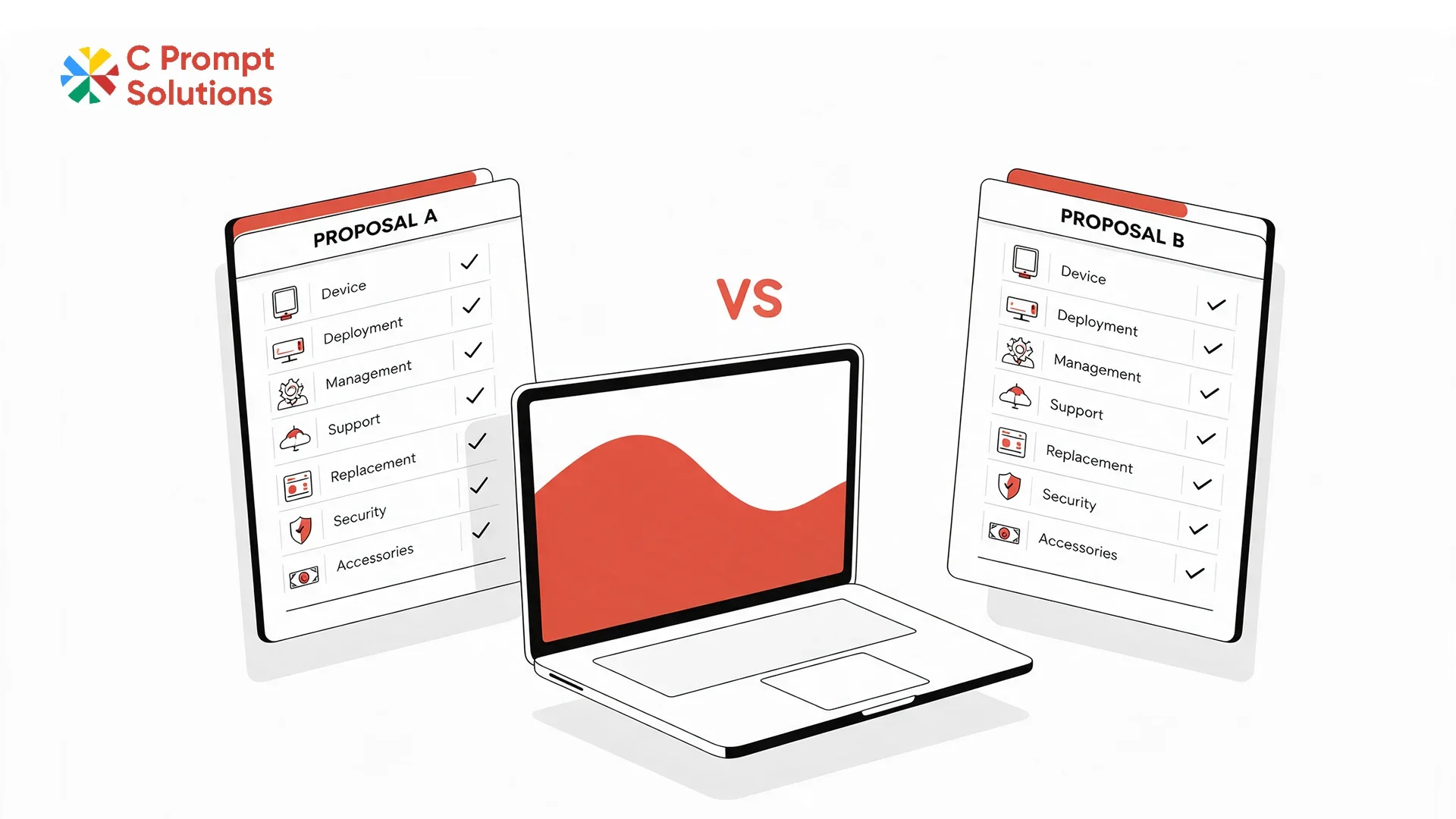
A side-by-side comparison of two device-as-a-service pricing proposals works best as a simple table: monthly amount, device profile, service scope, deployment charges, support hours, replacement scope, refresh schedule and exit services, listed as rows with each provider's answer in its own column. A proposal that leaves several rows blank or vague is not actually comparable yet, whatever the monthly figure says.
- List all eight items as rows, beyond the ones each provider volunteered
- Mark any item left unanswered as a gap to follow up on, not an assumption
- Compare the fully itemised total, not the headline monthly amount alone
Device as a Service Benefits Only Materialise With the Right Scope
Device as a service benefits include predictable billing, reduced internal IT burden, and a managed refresh cycle. These only show up if the proposal's scope actually matches what was promised in the sales conversation. A cheap monthly amount with a thin scope delivers none of these benefits once support, replacement or refresh gaps surface mid-contract.
Frequently Asked Questions
What is included in the monthly amount for device as a service pricing?
This varies by provider. Confirm whether configuration, helpdesk, replacement, reporting, refresh and retirement are all inside the monthly figure, or billed separately.
Why do two device as a service pricing quotes for the same device count differ?
The gap usually comes from device profile, service scope, deployment charges, or replacement coverage, not the base hardware. Match all of these before comparing the monthly numbers.
Are deployment charges always included in the monthly rate?
No. Some providers bundle deployment; others bill it separately per device. Confirm which model applies before comparing two proposals.
Should a device as a service proposal specify a refresh schedule?
Yes. A proposal without a stated refresh schedule leaves the total contract cost less predictable, since refresh timing affects cost over a multi-year term.
Is GST charged on device as a service?
Yes, at 18%, shown as a separate line on the invoice. Registered businesses can claim input tax credit on this amount.
What should exit services cover at the end of a device as a service contract?
Certified data wipe, device return or disposal terms, and any transition support if the business changes provider. Confirm this in writing at signing, not at renewal.
Does TDS apply to device as a service payments?
Yes, at 2% under Section 194-I, once monthly payments to a single vendor cross ₹50,000. Confirm this line is stated separately, not folded into the headline monthly amount.
What is the easiest way to compare two device-as-a-service proposals?
Build a simple table with all eight pricing items as rows and each provider's answer in its own column. Any row left blank is a gap to follow up on before deciding.
A comparable device as a service pricing proposal covers eight items: monthly amount, device profile, service scope, deployment charges, support hours, replacement scope, refresh schedule, and exit services. Confirm all eight in writing before comparing two proposals on the monthly figure alone.